
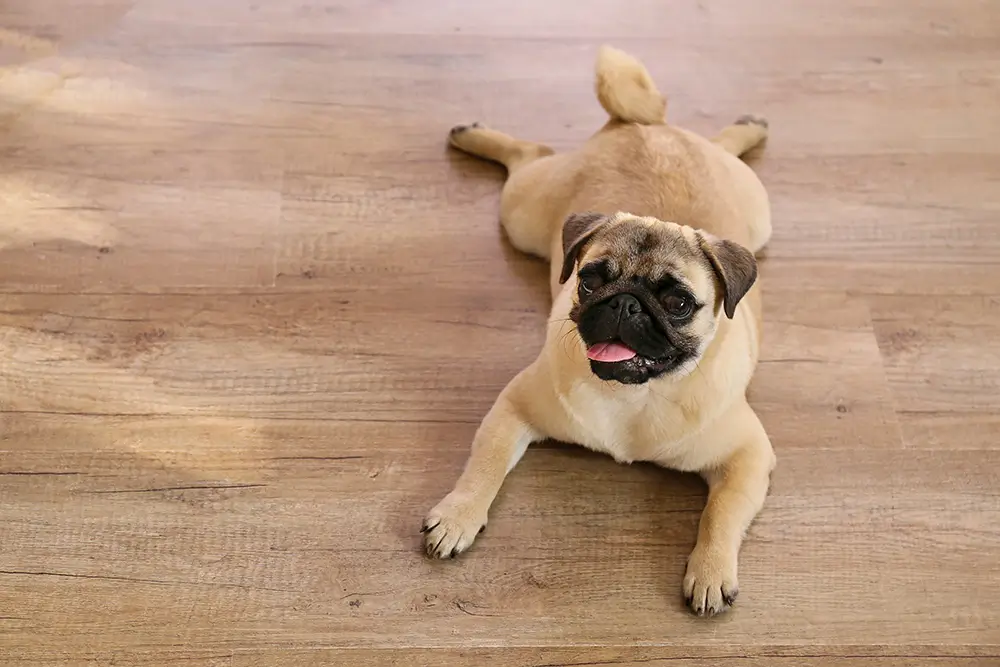
Pet urine stains are one of the most common things we find when carpet comes up in a Durham house, and one of the most common reasons people call us about a floor they already live on. They show up as dark gray or black patches by the back door, in a bedroom corner, or in the spot where a rug used to sit. The first question is always whether sanding will take them out. Sometimes it does. A light stain sitting in the top of the wood often sands away during a refinish. A dark one usually means the urine went through the board, and the only real fix is to cut those boards out and weave in new ones. It’s worth knowing which kind you have before you pay for a refinish.
Why Urine Turns Hardwood Dark
Urine is mostly water, and a big share of what’s left is urea. As it sits, bacteria break the urea down into ammonia. Ammonia darkens oak, which is the same reaction furniture makers once used on purpose to make “fumed” oak. In a floor it happens slowly, and because pets tend to go back to the same spot, the dark area keeps growing.
The finish protects the wood only when it’s intact and the accident gets wiped up fast. Urine that sits finds its way into the gaps between boards. From there it soaks down along the edges to the tongues and grooves, and sometimes into the subfloor. Bob Goldstein, a wood floor pro writing in Wood Floor Business, describes opening floors where the damage reached the subfloor and sometimes even the joists. That’s why so many stains are darkest along the board edges, and why a stain that looks shallow often goes deeper than it seems.
How To Tell How Deep A Stain Goes
Before anyone sands, look at the color, where the dark area sits on the board, and whether the spot smells.
- A cloudy, whitish, or dull spot where the wood color underneath looks normal is usually in the finish only, which makes it a cleaning or recoating job.
- Light gray or amber shading in a single board, with soft edges, is often in the top of the wood. Those have a decent chance of sanding out.
- Dark gray to black, darkest along the edges and ends of the boards, or spread across several boards, has almost always gone deep.
- A smell that comes back on humid days or when the floor gets damp means urine is still in the wood or the subfloor, whatever the surface looks like.
Species matters too. Red and white oak, which is what we find in most Durham houses, darken hard. Pine is worse, because black pet stains soak deep into it and almost never sand out, as we noted when we wrote about restoring heart pine floors.
If you just pulled up carpet and are seeing these spots for the first time, there are a few other things worth checking while the floor is bare, and we list them in our guide to checking for hardwood under carpet.
When Sanding Works
A full sand takes a thin layer off the top of every board. If the stain lives in that layer, it goes away with it. We usually find out on the first pass with the big machine. A stain that’s fading as we sand is coming out. One that looks the same after the first cut isn’t going to.
What we won’t do is keep sanding one spot to chase a deep stain. That leaves a dip you can see and feel, and it eats into the wood that has to last through every future refinish. Solid hardwood only has so much wood above the tongue, which our post on refinishing versus replacing explains. Engineered hardwood has much less (the difference is laid out in solid versus engineered hardwood), so a stain in an engineered floor usually means replacing the boards.
Sanding the whole room for stain work gives the most even result, because the stained boards and the rest of the floor get the same treatment and the same finish.
Can Bleach Or Peroxide Take A Stain Out?
Wood bleach and strong hydrogen peroxide can lighten a stain once the finish is sanded off. Goldstein points out that the peroxide people use for this is the 40 percent kind sold for salons, not the bottle from the drugstore. Oxalic acid is another option some pros use.
Bleaching can also trade a dark spot for a light one, and then that area has to be tinted or stained to blend back into the floor. Worse, urine still sitting deeper in the wood or in the cracks between boards can react with the new finish and bring the stain right back. Goldstein says that happens most often with waterborne finishes, though he’s seen it with oil-based ones too.
So we only treat bleaching as an option for a light stain, when you’re comfortable with some color difference and a floor that may not end up perfectly even. These are harsh chemicals that need ventilation and protective gear, and they have to be compatible with the finish going on afterward.
When Boards Must Be Replaced
Replacement is the right call when the stain is dark gray or black, runs along the board edges, covers several boards, or comes with a smell. It’s also the usual answer for engineered floors and for heart pine.
We cut the stained boards out and look at what’s underneath before anything new goes in. If the subfloor is stained but solid, it gets cleaned, dried, and sealed to block the odor. If it’s soft or soaked through, that section of subfloor gets replaced. In the rare case where the damage reaches a joist, that becomes framing work, and our post on permits for flooring work in Durham explains why framing repairs need one.
Then we weave in new boards of the same species, width, and thickness, staggering the ends so there’s no straight seam, and sand and finish the whole connected area together so the repair blends. You can see how that works in matching new hardwood to old floors.
Don’t Forget The Smell
A floor can look perfect after a refinish and still smell on the first humid day in June. If it does, there’s urine left somewhere below the surface, usually in the subfloor or between boards around the stain. That’s why we check under replaced boards before closing the floor back up, and why sealing or replacing the subfloor under a bad spot matters as much as the new wood on top.
For the surface, an enzyme cleaner breaks down what’s left of the urine. Use one that says it’s safe for sealed wood floors, follow the label, and don’t let it sit wet on the floor.
What It Costs
Stain work is usually part of a refinishing job. Replacing boards adds labor and material, and a damaged subfloor adds more. Our Durham refinishing cost guide has the per-square-foot ranges and notes that pet stains that soaked into the grain add labor. On our quotes, board replacement and subfloor repair are listed line by line, so you can see what the stains add to the job.
Keeping It From Happening Again
- Wipe up accidents right away. Blot, wipe with a damp cloth, and dry the spot. On an intact finish, a fresh accident cleaned up fast usually leaves nothing behind.
- Skip vinegar, ammonia cleaners, and steam mops. Each one wears down a finish, which we explain in how to clean hardwood floors.
- Keep the finish in good shape. Worn-through traffic paths and deep scratches let urine reach bare wood, so deal with them when they show up (see getting scratches out of hardwood).
- Check under rugs now and then, especially near doors and in the places your pet likes to sit. A rug can hide a problem for months.
- For a puppy, an older dog, or a cat that’s stopped using the box, think about what floor goes in the room where accidents happen. We weigh the options in hardwood versus LVP with kids and dogs.
Getting Your Floor Looked At
If you’ve got stains and want to know whether sanding will do it, we can usually tell you on the estimate. We’re a local flooring company in Durham, and I’ll look at the stains and the board edges and tell you which ones I think will sand out and which boards need to come out. You get a written, fixed quote by email, usually within a day or two. You can read more about how we refinish and repair floors on our hardwood flooring page.
Vilchis Hardwood Floors
237 Obie Dr, Durham, NC 27713
(919) 794-1116
[email protected]
Monday through Friday, 9:00 AM to 5:00 PM
Serving Durham, Raleigh, Cary, Chapel Hill, Carrboro, Hillsborough, Apex, Morrisville, Garner, and Wake Forest.
Request a free in-home estimate
Frequently Asked Questions
Can Pet Urine Stains Be Sanded Out Of Hardwood?
Light ones often can, if the discoloration is in the top of the wood. Dark gray or black stains usually go through the board and need the boards replaced.
Does Hydrogen Peroxide Remove Pet Stains From Wood Floors?
It can lighten them after the finish is sanded off, but it often leaves a pale spot that has to be stained to match, and the stain can come back once new finish goes on. It works best on light stains.
Why Does My Floor Still Smell After Refinishing?
Urine is still in the wood or the subfloor below the surface. Sanding the top doesn’t reach it. The fix is to open the floor at the source, treat or replace the subfloor, and replace the affected boards.
Will The New Boards Match The Rest Of The Floor?
When they’re the same species and width and the whole room is sanded and finished together, the repair should blend in. For older or less common floors, we may need reclaimed boards to get a close match.
Should I Refinish Or Replace A Floor With Stains All Over It?
Even with several stained spots, replacing the bad boards and refinishing the room usually costs less than a new floor. If the stains cover most of the floor or the subfloor is damaged everywhere, replacement starts to make more sense.
Mario Vilchis runs Vilchis Hardwood Floors out of 237 Obie Dr in Durham. He’s been installing and refinishing wood floors in the Triangle since 2009 and shows up to every estimate himself. Reach the shop at (919) 794-1116.