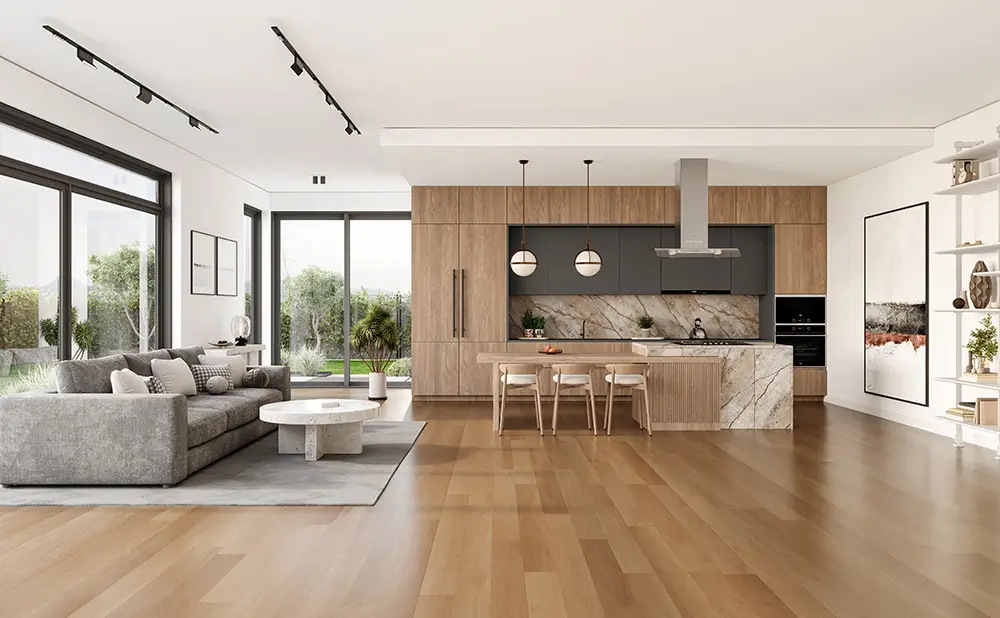
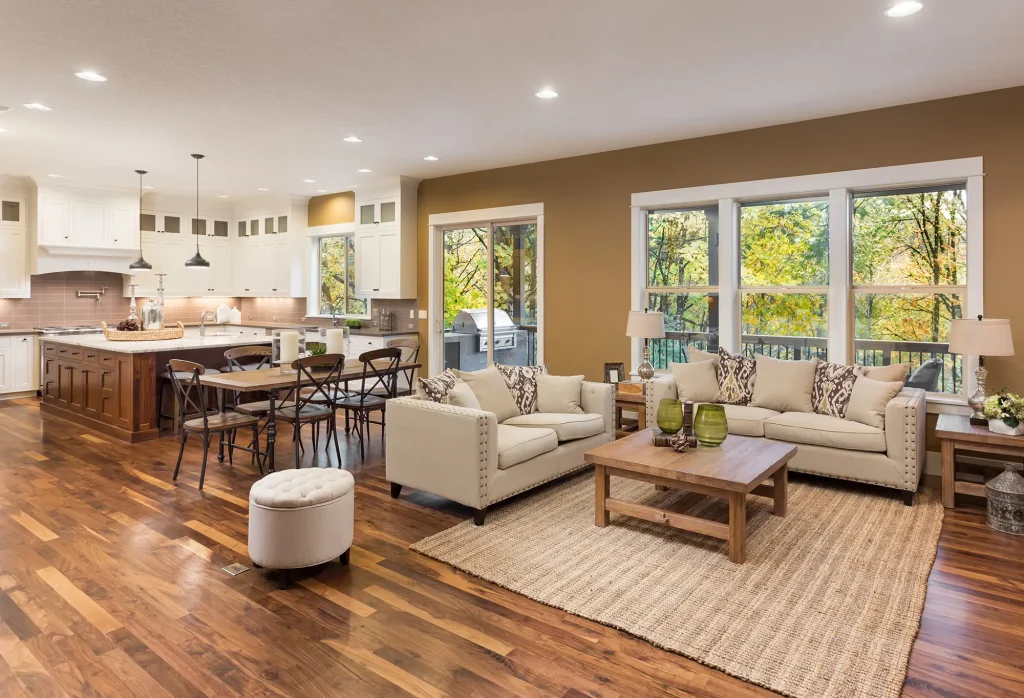
Yes, in most cases we can make new hardwood match your existing floors closely enough that you have to look twice to find the seam. But “match” is doing a lot of work in that sentence. Get the species, plank width, stain, or sheen wrong, and you end up with two different floors sitting next to each other in the same room. We’ve matched new hardwood to old in enough Raleigh additions, near Oakwood, Five Points, and the older streets around North Hills, that we can tell you exactly what makes or breaks it.
Why additions are harder than a straight refinish
Refinishing one floor is simple: sand it, stain it, seal it, done. Matching new wood to old is a different job, because you’re not changing one floor, you’re trying to make two floors, laid down years or decades apart, read as one. A kitchen bump-out, a sunroom addition, a converted porch, these are the jobs where a homeowner assumes we’ll just “match the wood” and doesn’t realize how many decisions sit inside that one request.
The floor you’re matching to has already spent years doing things new wood hasn’t done yet. Sunlight has ambered it. Foot traffic has burnished it. If it’s red oak, it’s probably darkened several shades since installation. New boards, even the same species cut from the same mill, start out lighter and less oxidized. Stain gets you close. It doesn’t get you identical, not on day one.
The four decisions that actually determine the match
Species
Most of the older homes we work on around Raleigh, especially the ones near Five Points and Oakwood, have red or white oak. That’s good news, because both are still widely milled and easy to source. Homes with less common species, heart pine, chestnut, narrow-strip maple, take more digging, and sometimes we’re sourcing reclaimed material instead of new-cut boards to get the grain pattern close.
Plank width
Older Raleigh homes were often built with 2 1/4 inch strip flooring. A lot of what’s popular now runs 3 to 5 inches or wider. If your existing floor is narrow strip and you install wide plank in the addition, no stain color will hide that mismatch. You either match the width or you plan a transition, a threshold, a change in flooring direction, a different material entirely, so the change reads as intentional instead of like a patch job.
Stain
This is where most of the guesswork lives. We don’t try to match a 40-year-old floor’s exact current color straight out of the can. We test stain samples on the actual new wood, side by side with your existing floor, in the room’s real light, because a stain that looks right under a showroom bulb can look off under your kitchen’s daylight. Sometimes we blend two stains to land in between. Sometimes the honest answer is that no stain will get you closer than 90%, and the last 10% closes on its own as the new wood ages.
Sheen and finish
Satin, semi-gloss, matte. Oil-based finish ambers over time; water-based stays closer to true color. If your existing floor has an oil-based finish that’s twenty years old, it’s sitting at a different amber level than a fresh coat of the same finish would be. We’ll walk you through what your existing finish is and what that means for the new section.
Solid or engineered for the addition
This depends on what’s under the new section. A slab addition or a room over a crawlspace with moisture concerns often calls for engineered hardwood, which handles subfloor movement better than solid. A wood-framed addition tied into your existing joists can usually take solid, matching what’s already in the house. We’ve written more on the tradeoffs here: solid vs. engineered hardwood.
Site-finished almost always wins for additions
Prefinished boards come with a factory edge and a fixed sheen you can’t adjust once they’re down. For an addition where you’re trying to blend into an existing floor, site-finishing gives us room to mix stain on-site, sand the seam flush, and finish both the old and new sections together so the transition line disappears instead of catching light differently. We go deeper into why this matters most in older housing stock in this post on site-finished vs. prefinished floors.
What we check before we order a single board
- Pull up a board from an inconspicuous spot (a closet, under an appliance) to confirm species and check for any past refinishing that changed the color
- Measure exact plank width and confirm the tongue-and-groove profile
- Test moisture content in both the existing floor and the new subfloor before acclimating anything
- Check what’s under the addition, slab, crawlspace, or basement, since that decides solid vs. engineered
That last point matters more in Raleigh’s older neighborhoods than people expect. Additions on 60 and 70-year-old homes often reveal subfloor surprises once we pull up the old material, uneven joists, old patch jobs, moisture we didn’t know about until we opened things up. We’ve written about what that looks like in our post on what we find under the floors in older bungalows. It’s Durham-specific in the title, but the same housing stock and the same subfloor issues show up all over Raleigh’s older neighborhoods.
Acclimation isn’t optional, even for a small addition
New hardwood needs to sit in the space and adjust to the room’s actual humidity and temperature before it goes down, not just for a few days on a calendar, but until its moisture content is close to the subfloor’s. Skip this step on an addition and you’ll see gaps or cupping in the new section within a year, while the original floor next to it stays stable. The National Wood Flooring Association’s technical guidelines lay out the moisture-content targets we test against on every job, and we don’t cut that step short just because it’s a smaller room.
What this costs in Raleigh
Matching work takes more labor than a standard install because of the sampling, testing, and hand-blending involved, so expect the higher end of typical hardwood pricing rather than the low end. As a rough range for the Triangle in 2026, solid hardwood runs $8 to $14 per square foot installed and engineered runs $7 to $12, with matching work landing toward the top of those ranges. We give you a written, fixed-price quote after we’ve seen the existing floor in person, not a phone estimate.
Frequently asked questions
Can you really match a 30 or 40-year-old floor?
Usually close enough that it’s not noticeable at a normal viewing distance. Getting it pixel-perfect on day one isn’t realistic, since the old floor has decades of light exposure the new section hasn’t had yet. Most homeowners are happy with how close we get, and the gap narrows further as the new wood ages.
What if my existing floor is a species that’s hard to find now?
We source reclaimed material for some older homes, particularly ones with heart pine or chestnut. It costs more and takes longer to source, but it’s usually the better route than trying to fake the grain pattern with a common species.
Will the new section always look slightly different?
For the first several months, probably yes, especially in direct sunlight. Wood continues to amber and take on wear patterns after installation. We tell every Raleigh client this upfront instead of promising a perfect match on install day.
Do you handle the whole addition, subfloor and all?
Yes. We check the subfloor, handle any repairs it needs, and install and finish the new hardwood as one job.
If you’re planning an addition in Raleigh and want an honest read on whether your existing floor can be matched, call Mario and the crew at (919) 794-1116, or visit our page on hardwood flooring installation in Raleigh to see the rest of what we do in your neighborhood. You can also read more about our hardwood flooring installation and refinishing services.