
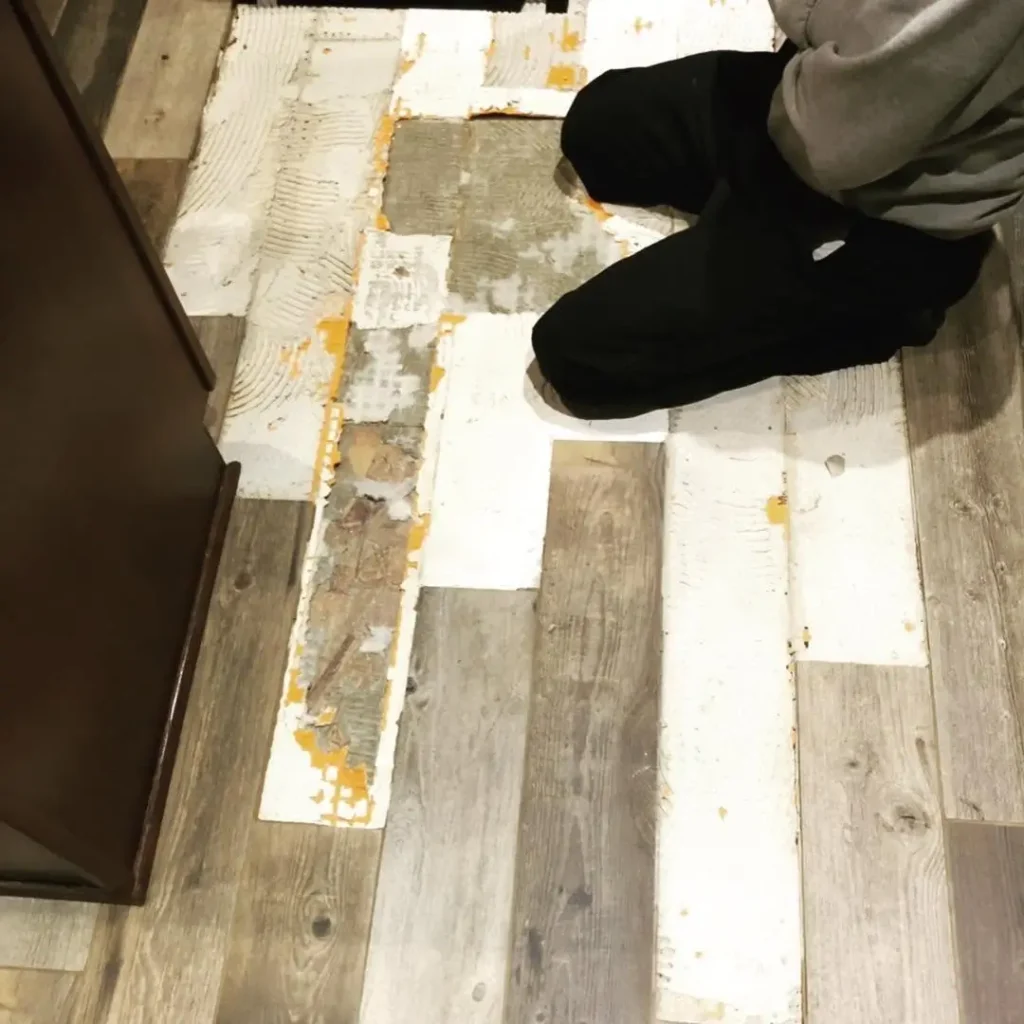
One of the questions we get most on estimates is whether you need a permit to replace floors in Durham. For the floor itself, usually not. Pulling up carpet and putting down hardwood, swapping old vinyl for luxury vinyl plank, or sanding and refinishing the floor you already have doesn’t need a permit on a single-family house in Durham, as long as the job costs $40,000 or less. Permits come into it when the work touches what’s around and under the floor: the framing, the plumbing, the wiring, or the ductwork.
This is how we understand the rules from doing the work. It isn’t legal advice, and when there’s any doubt, the city has the final word.
Who Handles Permits In Durham
Permits in Durham go through the City-County Building & Safety Department. Most people still call it Inspections, and so do parts of the city’s own website. One department covers both the City of Durham and the unincorporated parts of Durham County, so the answer doesn’t change if you live just outside city limits. The exception is an address inside another town’s limits. Parts of Chapel Hill and Raleigh reach into Durham County, and those addresses go through that town’s own inspections office.
The department reviews building, electrical, mechanical, plumbing, and fire permits and enforces the North Carolina State Building Code. It’s at 101 City Hall Plaza downtown, the phone number is 919-560-4144, and it’s open weekdays from 8 a.m. to 5 p.m. Contractors apply for trade permits and schedule inspections online through the city’s Land Development Office system. You can find all of it on the city’s City-County Building & Safety page.
The Rule That Covers Most Flooring Jobs
The rule comes from state law, N.C. General Statute 160D-1110(c). Work on a single-family house that costs $40,000 or less and is done to the state building code doesn’t need a permit unless it involves one of these:
- Adding, repairing, or replacing load-bearing structure.
- Adding plumbing or changing its design. Replacing a fixture with one of the same size and capacity is exempt.
- Adding, replacing, or changing the design of heating, air conditioning, or electrical wiring, devices, appliances, or equipment. Like-kind swaps of electrical devices and light fixtures are exempt.
- Using materials the building code doesn’t allow.
- Adding roofing (replacing it is exempt).
- Anything the North Carolina Fire Code applies to.
Flooring is a covering, so replacing it doesn’t fall into any of those on its own. The first three are the ones a flooring job can run into, and they’re what the rest of this post is about.
Flooring Work That Usually Doesn’t Need A Permit
- Replacing carpet, sheet vinyl, laminate, vinyl plank, or tile with a new floor covering.
- Installing hardwood over a sound subfloor, or engineered hardwood over a slab.
- Sanding and refinishing existing hardwood.
- Pulling a toilet to install the new floor and setting it back in the same spot.
- Lifting floor register covers and setting them back, or swapping them for new covers.
Our post on big-box installation versus a local Durham crew makes the same point: flooring in an existing room rarely triggers a Durham permit.
Subfloor repair is the gray area. The subfloor carries weight to the joists, and replacing it can be read as a repair to load-bearing structure. A small patch under a leaky toilet is a different job from tearing out the subfloor in a whole room. If more than a patch is coming out, call Building & Safety and ask how they treat it before the work starts.
When A Flooring Job Does Need A Permit
The Framing Under The Floor
Joists, beams, girders, sill plates, and the piers or foundation under them are all load-bearing. Sistering a sagging joist, replacing a rotted sill, adding piers, or putting in a new girder to take the dip out of a floor all count as repairing load-bearing structure, and that needs a permit no matter how small the bill is. Our post on leveling sloped floors in old Durham mill houses goes through what that work looks like, and the post on rotted subfloors and termite damage covers who fixes what when the damage goes past the subfloor.
Taking out a wall so one floor can run through the whole first floor is the other common one. If that wall is load-bearing, removing it is structural work and needs a permit before anyone touches it.
Moving Plumbing
Setting a toilet back where it was is a replacement. Moving it a few feet during a bathroom remodel, adding a floor drain, or relocating the washer hookups changes the design of the plumbing, and that needs a plumbing permit and a licensed plumber. Our post on tile versus LVP in a bathroom covers the flooring side of a bath remodel.
Heated Floors And New Outlets
Electric radiant heat under tile or vinyl plank adds electrical equipment and usually a new circuit, so it needs an electrical permit. The same goes for adding a floor outlet in the middle of a living room. Our post on vinyl plank over radiant heat covers which floors work over a heated system.
Moving Floor Registers
Replacing a register cover is nothing. Moving a floor register to a new spot or adding a new one means changing the ductwork, which is a change to the heating and air conditioning system and needs a mechanical permit.
Turning A Garage Or Basement Into Living Space
Putting a new floor in a garage or unfinished basement is a flooring job. Turning that space into a bedroom or den almost always adds wiring, heating, or air conditioning, and those pieces need permits. Ask Building & Safety about the whole project before you start.
When The Job Goes Over $40,000
The exemption only covers work that costs $40,000 or less. A large whole-house project, or flooring that’s part of a bigger renovation, can go past that, and then the blanket exemption no longer applies. Call Building & Safety about the job before it starts. That’s also the point where North Carolina requires a licensed general contractor, which our post on what to ask a licensed and insured contractor explains.
Historic Districts, HOAs, And Condos
If your house is in one of Durham’s local historic districts, exterior changes need a Certificate of Appropriateness from the city’s preservation staff. Interior work that doesn’t change the outside of the house is treated as routine maintenance and doesn’t need one. That means new floors and refinishing are fine, but replacing windows is not considered interior work. If you have original floors in an older house, our post on restoring heart pine floors in Durham covers what to save.
Homeowners associations and condo boards are a separate layer. They aren’t the city, but they can still require approval before you change floors, and some condo buildings set rules on sound underlayment. Our post on condo flooring and HOA sound rules explains what those usually look like. If you live in a condo building, ask Building & Safety too, since the exemption is written for single-family houses.
Lead Paint And Asbestos
Neither one is a Building & Safety permit, but both can stop a flooring job. Old 9×9 vinyl tiles and the adhesive under them can contain asbestos, and they should be tested before anyone pulls them up. In a house built before 1978, sanding painted floor borders brings federal lead-safe rules into play. Our posts on what we find under 1940s Durham bungalows and on heart pine floors cover both in more detail.
Who Pulls The Permit
Licensed plumbers, electricians, and HVAC contractors pull the permits for their own work. Structural permits are pulled by whoever is doing the structural repair. If you plan to do permitted work on your own house yourself, call Building & Safety first and ask what they need from a homeowner.
Whoever you hire, ask two questions before the job starts. Does any of this need a permit, and who’s pulling it? A contractor who can’t answer both clearly is worth a second look, and it’s one of the questions in our list of 12 questions to ask a Durham flooring company. Unpermitted structural, plumbing, or electrical work can come back to bite you when you sell the house.
On our own jobs, the flooring rarely needs a permit. When we open a floor and find something that does, like a sagging joist, a rotted sill, or plumbing that has to move, we stop, show you what we found, and tell you which trade and which permit it needs before our part of the job goes any further.
Getting An Estimate
If you’re planning new floors and aren’t sure whether anything around them needs a permit, we can usually tell you on the estimate. We’re a Durham flooring company that’s been working in houses here since 2009, and I’ll look at the subfloor, the framing where we can see it, and anything that might have to move. You get a written, fixed quote by email, usually within a day or two.
Vilchis Hardwood Floors
237 Obie Dr, Durham, NC 27713
(919) 794-1116
[email protected]
Monday through Friday, 9:00 AM to 5:00 PM
Serving Durham, Raleigh, Cary, Chapel Hill, Carrboro, Hillsborough, Apex, Morrisville, Garner, and Wake Forest.
Request a free in-home estimate
Frequently Asked Questions
Do I Need A Permit To Install Hardwood Floors In Durham?
Not for the hardwood itself, on a single-family house, as long as the job is $40,000 or less and doesn’t involve structural, plumbing, electrical, or HVAC changes.
Do I Need A Permit To Refinish Hardwood Floors?
No. Sanding and refinishing is a surface job. If the floor has painted borders in a house built before 1978, federal lead-safe rules apply to whoever does the sanding, but that’s not a city permit.
Do I Need A Permit To Replace A Subfloor?
A small patch is usually treated as a repair. Replacing the subfloor in a whole room is closer to a structural repair, so call Building & Safety before you start. Anything involving the joists themselves needs a permit.
Do Heated Floors Need A Permit?
Yes. Electric radiant floor heat adds electrical equipment, and North Carolina’s exemption doesn’t cover that, so plan on an electrical permit and a licensed electrician.
Is It Different Outside Durham City Limits?
Not for this. City-County Building & Safety handles permits for the City of Durham and unincorporated Durham County alike, and the state rule is the same everywhere in North Carolina. If your address is inside Chapel Hill or Raleigh town limits, call that town instead.
Mario Vilchis runs Vilchis Hardwood Floors out of 237 Obie Dr in Durham. He’s been installing and refinishing wood floors in the Triangle since 2009 and shows up to every estimate himself. Reach the shop at (919) 794-1116.