
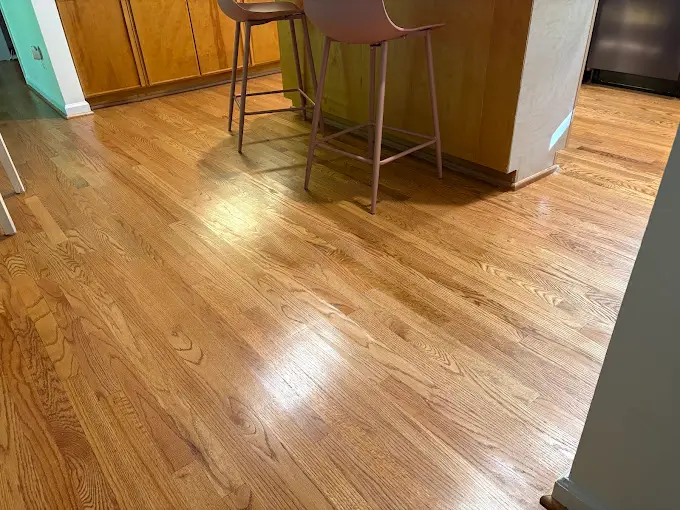
Most of the water-damaged floors we see in Durham didn’t start with a storm. They started with a dishwasher hose, a toilet supply line, a water heater, a fridge line, or a washing machine upstairs. The leak gets found, someone shuts the water off, and then the homeowner is standing in a wet kitchen wondering what to do next and whether insurance will pay for any of it.
The first two days decide whether a hardwood floor can be saved or has to come out, and whether mold gets a start. They also shape how smoothly the insurance claim goes. We install and repair floors. We’re not insurance agents or lawyers, so treat the insurance part as general background and check everything against your own policy.
The First Hour: Stop The Water And Make It Safe
Shut the water off at the fixture if you can, or at the main valve if you can’t. Find your main before you ever need it. In a lot of Durham houses it’s in the crawlspace near where the line comes in, in the garage, or at the meter by the street.
If water has reached outlets, cords, or appliances, turn the power off to that area at the breaker panel before you walk through it. If the leak came from upstairs, stay out from under a ceiling that’s sagging or dripping.
Then, before you move anything, take photos and video of everything wet: the source, the floors, the walls, the ceiling below, and any furniture or rugs. The adjuster will want to see what it looked like before anything was moved.
The First 24 Hours: Call Your Insurer And Start Drying
Call your agent or insurance company as soon as you can and open a claim. Ask them two things on that call: whether they want you to use a specific water damage restoration company, and what they need from you before anything is torn out.
Your policy expects you to protect the house from further damage. North Carolina’s Department of Insurance tells homeowners to photograph and list the damage first, then make only temporary repairs, and to save every receipt. For a leak, that means stopping the water and getting the house drying. Hold off on tearing out the floor until the adjuster has seen it.
A few things you can do right away:
- Mop up or wet-vac standing water.
- Get rugs and furniture off wet floors. Put foil or blocks under furniture legs you can’t move.
- Run the air conditioning and any dehumidifiers you have, and keep the house closed up. Opening windows on a humid Durham day adds moisture instead of removing it.
- Keep a sample of any flooring or pad that gets pulled up, and if you have leftover boxes of the flooring in the garage, keep the labels. They tell the adjuster exactly what product it was.
For anything more than a small spill, a water damage restoration company is usually the right first call after the plumber. They bring commercial fans and dehumidifiers, map the moisture in the floor and walls, and log the readings every day. We use that log when we look at the floor, and it gives the adjuster a record too.
Why The 48-Hour Mark Matters
The EPA’s guidance is to dry wet materials within 24 to 48 hours to keep mold from getting started. It isn’t a guarantee either way. Mold can still grow after quick drying, and it doesn’t always grow after 48 hours. Faster drying still improves your odds, and a floor that dries quickly has a better chance of being saved.
If the water came from a sewer backup or a toilet with waste in it, treat it as contaminated. The cleanup calls for protective gear, and porous materials like carpet and pad usually get thrown out. Leave that one to a restoration company.
What Water Does To Each Kind Of Floor
Solid Hardwood
Hardwood soaks up water from underneath and along the board edges. The edges swell before the centers do, and the floor cups, with each board higher at the sides than in the middle. Our post on how humidity affects hardwood floors explains cupping in more detail.
A lot of cupped floors flatten back out as they dry, which surprises people, and it’s why the worst thing you can do is sand a cupped floor right away. Sand it flat while it’s still wet, and when it finishes drying, the centers end up higher than the edges and the floor crowns. We wait until the moisture readings in the damaged area are back close to the readings in a dry room before we decide anything. Depending on how wet it got and how well it’s being dried, that can take weeks.
Once it’s dry, a sand and refinish is sometimes enough. Other floors need a few boards replaced, and some have to come out. Black stains, boards that stay cupped, and boards that split or pulled loose from their nails are the usual signs of replacement. Our post on whether to refinish or replace hardwood walks through that decision.
Engineered Hardwood
Engineered hardwood is more stable than solid, but long soaking can loosen the wood layer from the core underneath. It also has less wood to sand through, so a cupped engineered floor has fewer chances to be sanded flat.
Laminate
Most laminate has a core of high-density fiberboard. Once water gets into the edges, they swell, and they don’t go back down. Swollen laminate is usually replaced, not repaired. Our post on laminate buckling and peaking covers how to tell water damage from the other causes, and the post on waterproof versus water-resistant laminate explains what those labels promise.
Vinyl Plank
The planks themselves are waterproof, but the seams between them aren’t sealed. Water runs through the seams and gets trapped underneath, where it can’t dry and the subfloor stays wet. In a real leak, the planks in the wet area usually have to come up so the subfloor can dry. If the locking edges weren’t damaged when they came up, they can sometimes go back down.
Tile
Tile itself shrugs off water. The concern is what’s under it. Water that gets through grout or along the edges can soak the subfloor or backer board, and a tile that sounds hollow when you tap it weeks later is a sign something underneath let go.
The Subfloor
Plywood often dries out and stays in service. OSB swells along its edges when it soaks, and particleboard underlayment swells and stays swollen, which our post on particleboard under carpet explains. If the leak was slow and went on for a long time, the subfloor can be rotted, and our post on rotted subfloors and termite damage covers what happens next.
What NC Homeowners Insurance Usually Covers
Every policy is different, so read yours, and ask your agent to walk you through it if the wording isn’t clear.
Water that escapes suddenly and accidentally from plumbing, a water heater, or an appliance is usually covered. North Carolina’s Department of Insurance uses a burst pipe as its example of water damage a homeowners policy covers. That usually includes the damage the water did to your floors, subfloor, and walls. Many policies also pay to tear out and replace the parts of the house that have to be opened up to fix the leak. If the house isn’t livable while it’s repaired, additional living expense coverage may pay for a hotel and meals, so save every receipt.
Usually not covered:
- The part that failed. The policy generally pays for the water damage, not the broken supply line or the worn-out water heater itself.
- Slow leaks. Many policies exclude damage from leakage that went on for weeks or months. A drip under the sink that rotted the cabinet floor over a year usually falls here.
- Flood or rising water from outside. The NC Department of Insurance is clear that homeowners policies don’t cover it. Flood coverage comes from a separate flood policy, through the National Flood Insurance Program or a private insurer, and it has a waiting period, so you can’t buy it the week a storm is coming.
- Sewer or drain backup, unless you added it. The standard policy leaves it out, but many companies sell it as an add-on endorsement.
- Mold, beyond whatever limit your policy sets. Many policies cap it or exclude it, which is another reason to dry things fast.
Your deductible comes off the top either way.
What If The New Floor Won’t Match The Old One?
This comes up a lot with floors that run through several rooms. The NC Department of Insurance’s homeowners insurance FAQ answers it for roofs. The policy covers direct physical damage, and the company only has to replace the damaged area, even if the new shingles won’t match. Expect your adjuster to start from the same place with a floor. Ask early how they plan to handle it.
With hardwood, matching is often doable. We weave new boards in and then sand and finish the whole connected area together, so the repair blends. Our post on matching new hardwood to old floors shows how. Laminate and vinyl plank are harder, because product lines get discontinued and there may be nothing left to match. That’s when the spare boxes in the garage pay off, which is why we tell people in our post on upgrading builder-grade floors to keep a few.
Timelines And Getting Help
According to the same FAQ, your insurance company should acknowledge your claim within 30 days, but there’s no set deadline for settling it, since every claim is different. If you run into a problem you can’t sort out with your company, the Department of Insurance’s Consumer Services Division takes calls at 855-408-1212.
When We Come In
The order that usually works best is plumber, insurer, restoration company, and then us once the floor is drying. We take moisture readings in the damaged area and in an unaffected room to compare, check the subfloor, and tell you what the floor needs. If the adjuster wants a written description of the damage and the repair from the flooring contractor, we provide one. Our quotes list removal, subfloor work, and the new floor line by line, so it’s clear what’s what.
If the floor is hardwood, we’ll often tell you to wait before doing anything permanent. Fixing it after it has dried and settled costs less and lasts longer than rushing it. You can see how we handle repairs and refinishing on our hardwood flooring page.
Heading Off The Next Leak
- Swap rubber supply lines on the washer, toilets, and sinks for braided steel ones, and replace them every several years.
- Put a drain pan under the water heater and under an upstairs washer.
- Put inexpensive leak sensors under the sinks, the dishwasher, the fridge, and the water heater. Some homeowners go further and install an automatic shutoff valve on the main line. Ask your agent whether your company gives a discount for one.
- Shut the main off when you leave town for more than a few days.
Getting Your Floor Looked At
If you’ve had a leak and want to know whether your floor can be saved, call us once the water is stopped and drying has started. We’re the flooring crew here in Durham that’s been fixing and refinishing floors in the Triangle since 2009. I’ll come out, take readings, and tell you what we see. You get a written quote by email, usually within a day or two.
Vilchis Hardwood Floors
237 Obie Dr, Durham, NC 27713
(919) 794-1116
[email protected]
Monday through Friday, 9:00 AM to 5:00 PM
Serving Durham, Raleigh, Cary, Chapel Hill, Carrboro, Hillsborough, Apex, Morrisville, Garner, and Wake Forest.
Request a free in-home estimate
Frequently Asked Questions
Does Homeowners Insurance Cover Water-Damaged Hardwood Floors?
Often, if the water came suddenly from inside the house, like a burst supply line or a failed dishwasher hose. Damage from a slow leak that went on for weeks, or from flooding outside, usually isn’t covered by a standard policy. Your own policy wording is what decides it.
Will Cupped Hardwood Go Back To Flat?
Often it will, at least partly, once it dries out. That’s why we don’t sand a cupped floor until the moisture readings are back close to normal. Sanding too early leaves the floor crowned once it finishes drying.
Should I Pull Up Wet Flooring Myself?
Take photos first and call your insurer before you remove anything beyond rugs and furniture. Wet carpet pad and badly swollen laminate usually come out, but let the adjuster or the restoration company see it, and keep a sample.
Who Do I Call First?
A plumber, if the leak isn’t fully stopped. Then your insurance company, then a restoration company to dry things out. Call a flooring contractor once drying has started and you want to know what can be saved.
Is Water From A Storm Covered?
Rain that comes in through storm damage to the roof is usually handled by your homeowners policy. Rising water from outside is flood, and that needs a separate flood policy.
Mario Vilchis runs Vilchis Hardwood Floors out of 237 Obie Dr in Durham. He’s been installing and refinishing wood floors in the Triangle since 2009 and shows up to every estimate himself. Reach the shop at (919) 794-1116.

