
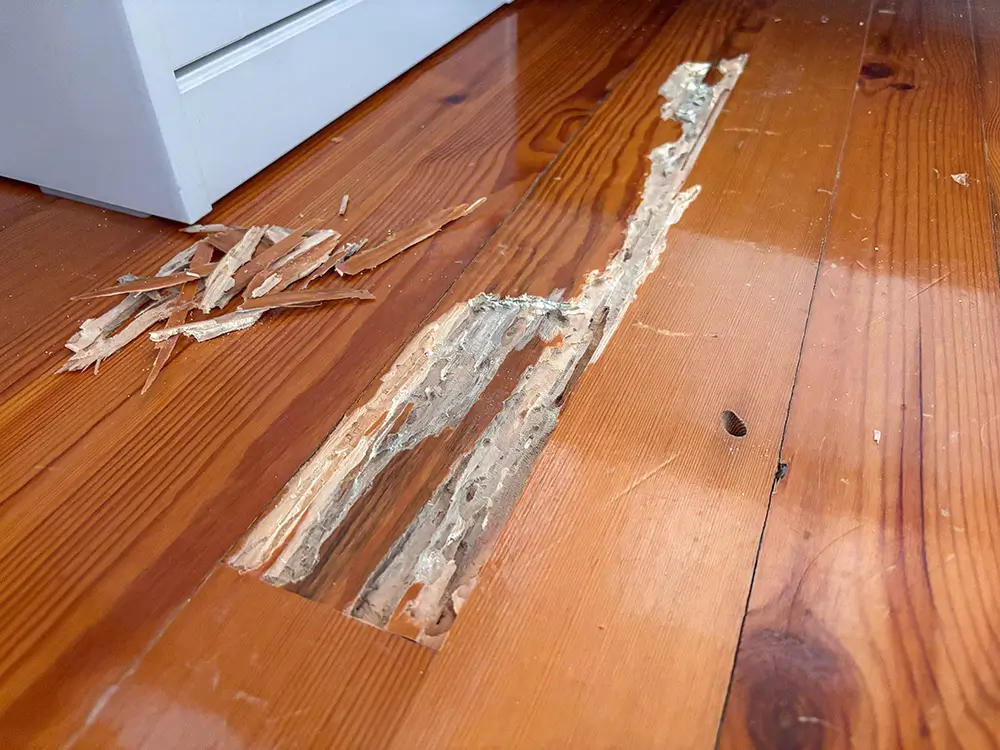
I’m Mario Vilchis, and I run the crew at Vilchis Hardwood Floors. Every so often we pull up an old floor in a Cary house and the wood underneath isn’t solid anymore. Sometimes it’s a rotted subfloor from a leak nobody knew about, sometimes it’s termites, and now and then it’s both. Whichever it is, the homeowner is usually standing in the doorway with two questions: how bad is it, and what happens to the job now?
The answers depend on what caused the damage, whether that cause is still active, and how deep it goes. Here’s how we work through it with the homeowner when it happens.
First, We Stop
The worst thing a flooring crew can do with a soft spot is cover it up. New plank over a rotted subfloor can feel fine for a few months, then start to bounce, squeak, or sink. If the leak or the termites are still there, the damage keeps spreading underneath your brand-new floor the whole time.
So when we find it, work on that area stops. Your price was fixed and in writing before we started, and we don’t change the plan on our own. We show you what we found, explain the options, and you decide what happens next.
How We Tell A Rotted Subfloor From Termite Damage
Both leave you with weak wood, but they look different, and the difference tells you who needs to be called.
Rot comes from water that sat for a long time. The wood is usually stained dark. If it’s still wet, it feels spongy. If it has dried out, it often cracks into small cube-shaped chunks that crumble in your hand. There may be a musty smell or white, thread-like fungus on the surface. Rot almost always sits right under a water source: a toilet, a tub, the dishwasher, the sink, a fridge water line, the washer, or an exterior door or slider.
Termite damage looks more like the wood was hollowed out from the inside. Termites eat along the grain and leave thin layers behind, often with soil packed into the channels. NC State Extension lists a few signs we look for too: wood that sounds hollow when you tap it with a screwdriver handle, wood that a screwdriver pushes into easily, and a thin, gritty gray-brown film on the damaged surface. In the crawlspace you may see mud tubes on the foundation walls, on the piers, or hanging from the subfloor. On the hardwood itself, termite damage can show up as a blistered or rippled finish that’s easy to mistake for water damage.
Finding both at once isn’t unusual. Subterranean termites need moisture to survive, so a slow plumbing leak or a damp crawlspace can invite them in.
Our first test is simple. We push an awl or a screwdriver into the wood. Sound wood fights back. Damaged wood gives. Then we take moisture readings, because a wet reading tells us the cause is probably still active.
Is It Still Happening?
This matters more than how ugly the damage looks. Old, dry damage is a repair job. Active damage needs its cause fixed first, or the new wood goes the same way as the old.
For rot, the moisture meter tells most of the story. If the wood is still wet, something is still feeding it: a supply line, a toilet wax ring, a dishwasher hose, a door threshold that lets rain in, a dripping AC condensate line, or a crawlspace that holds too much moisture. That gets fixed before anything gets closed up.
Termites are harder to call, and we don’t make that call. According to NC State Extension’s guide to eastern subterranean termites, there’s no reliable way to tell how old termite damage is without past inspection records, and an empty mud tube doesn’t mean the termites are gone. The same guide recommends against do-it-yourself termite treatment. That’s a job for a licensed pest control company, and they should inspect and treat before any repair, or the new subfloor just becomes their next meal.
If you already have a termite contract, the kind a lot of people around here call a termite bond, call that company first and ask exactly what it covers. Some contracts pay for repairs and some only cover re-treatment. NC State also notes that certain infestations, like a colony living above ground because of a leak, are typically excluded from contract warranties.
Who Fixes What
The damage can stop at the subfloor, or it can go deeper into the framing. That line decides who does the work.
The subfloor and the floor on top of it are our part. We cut out the damaged subfloor, put in new material, and lay the floor back down.
Joists, sill plates, and beams are structural. If the damage reaches them, the repair belongs to a carpenter or contractor who does structural work, sometimes with an engineer involved, and structural repairs generally need a building permit. We’ll show you where the damage goes past the subfloor, pause our part, and come back once the framing is solid. If the combined project reaches $40,000, North Carolina requires a licensed general contractor, and our post on what paperwork to ask a contractor for covers how to check.
Termites go to a licensed pest control company. Leaks go to a plumber, and condensate or crawlspace moisture problems go to an HVAC or crawlspace contractor. We can tell you which one you need, but we won’t pretend to be any of them.
What A Proper Subfloor Repair Looks Like
Patching a rotted subfloor isn’t complicated, but each step matters if you want the new floor to stay flat and quiet.
- Open it up past the damage. The weak area usually reaches farther than the soft spot you felt, so flooring keeps coming up until there’s sound subfloor on every side. We probe as we go.
- Cut back to solid wood, with the cut edges landing on joists or on new blocking between them. Every edge of the patch needs something under it.
- Put in new subfloor of the same thickness as the old, so the new floor sits flush with the rest of the room. Glue it and screw it down so it doesn’t squeak later.
- Check moisture before anything goes back on top. The framing around the repair and the new subfloor should read close to the rest of the floor.
- Put the floor back. With hardwood, we weave new boards into the old ones instead of leaving a straight seam, then color-match the stain so the repair blends in. Our post on matching new hardwood to old floors goes into how that works.
Tile is less forgiving than wood. A floor that flexes even a little will crack grout and tile, so a repair under a bathroom or kitchen getting new tile has to be stiff and flat before any backer board goes down.
How It Changes The Price And The Schedule
Your original quote covers the original job. The added work gets explained and priced before we do it, so the final bill doesn’t catch you off guard. What moves that number is how much subfloor has to be replaced, how much extra flooring has to come up to reach sound wood, and how many new boards have to be woven in to match.
A small subfloor patch is a minor detour. Anything that needs a pest treatment, a plumber, or a structural repair runs on their schedule, so the job may pause until that work is done. We’d rather wait a week than close up a floor over a problem that’s still active.
Before anything gets cut out, take photos. Then read your homeowners policy or call your agent. In general, policies are more likely to cover sudden water damage, like a burst supply line, than termite damage or a slow leak that went on for months, but your policy is the only answer that counts. If your insurer or pest company wants a description from the contractor who found the damage, ask us.
Signs To Check Before You Start A Flooring Project
You can catch a lot of this before the old floor ever comes up. These are worth a look:
- Soft or bouncy spots near the dishwasher, sink, toilet, tub, washer, fridge, or an exterior door.
- A toilet that rocks when you sit on it.
- Hardwood with a blistered or rippled finish, or cupped boards near a door. Our post on how humidity affects hardwood floors explains which kinds of movement are normal and which aren’t.
- In the crawlspace: mud tubes on piers or foundation walls, standing water, or drips from the AC lines.
- Outside: mulch, pine straw, or soil piled up against the siding or any wood part of the house.
If you spot any of these, call a pest company or a plumber first, then call us. A floor that has its problems fixed before we start goes in faster and costs less than one where we find them halfway through.
Getting It Looked At In Cary
Plenty of Cary houses sit over a crawlspace, and North Carolina summers push a lot of moisture under them. That’s why we check the subfloor and take moisture readings on every free in-home estimate, before we put a number in writing. We can’t see through tile or carpet, but we can usually tell you whether something feels wrong and where it’s worth opening up first.
Our shop is at 237 Obie Dr in Durham, a short drive down I-40, and most Cary neighborhoods are 20 to 25 minutes away. That includes MacGregor Downs, Lochmere, the older streets off Kildaire Farm Road, and North Cary near Morrisville. We cover the 27511, 27513, 27518, and 27519 ZIP codes. If you want to see the full list of what we install and refinish here, it’s all on our page for our flooring company in Cary.
Vilchis Hardwood Floors
237 Obie Dr, Durham, NC 27713
(919) 794-1116
[email protected]
Monday through Friday, 9:00 AM to 5:00 PM
Serving Cary, Durham, Raleigh, Chapel Hill, Carrboro, Hillsborough, Apex, Morrisville, Garner, and Wake Forest.
Request a free in-home estimate
Frequently Asked Questions
Does Homeowners Insurance Pay For A Rotted Subfloor Or Termite Damage?
It depends on your policy and on the cause. Sudden, accidental water damage is more often covered than termite damage or rot from a slow leak, which many policies exclude. Take photos before any repair and talk to your agent before the damaged wood is thrown away.
Can You Put New Flooring Over A Soft Spot?
Not if you want it to last. A soft spot means the subfloor is failing. Wood or vinyl on top of it will flex and squeak, and tile will crack. If the cause is still active, the damage keeps growing where you can’t see it. The weak section has to be cut out and replaced first.
How Do I Know If The Termites Are Still Active?
Have a licensed pest control company inspect the house. Empty mud tubes don’t prove the termites are gone, and there’s no reliable way to date damage just by looking at it. Keep the written inspection report, since it helps with future inspections and with selling the house.
Will The Repaired Section Match The Rest Of My Hardwood?
That’s the goal. We match the species and board width, weave the new boards in so there’s no straight seam, and color-match the stain. Refinishing the whole connected area after the repair gives the most even result, because the old and new wood get the same sanding and finish. For more on when a damaged floor is worth saving at all, see our post on refinishing versus replacing hardwood, or our hardwood floor repair and refinishing page.